About this novel
Description
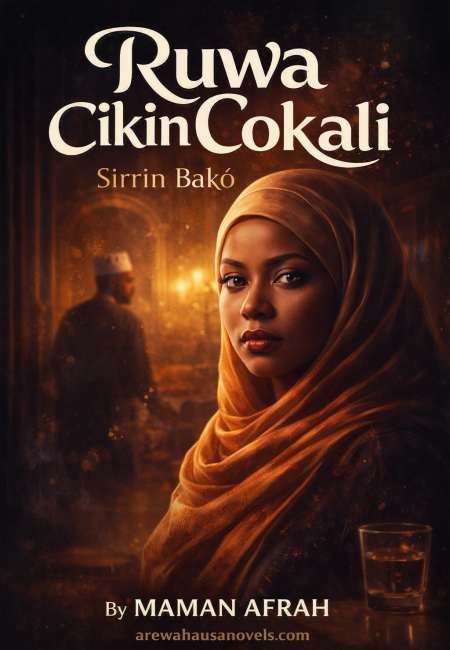
Ruwa Cikin Cokali is a story of three young women whose lives appear completely different on the surface, yet each carries a private struggle that threatens to reshape her future. In one home, daughters are treated as burdens because their father desperately wants a son. In another, a young wife hides the pain of a troubled marriage behind obedience and silence. Elsewhere, a brilliant but neglected girl is forced to endure poverty, rejection, and humiliation while someone else dreams of taking the life she believes she deserves. Then fate brings their worlds closer to a wealthy young man who sees something valuable where others see nothing.
But Ibrahim's first encounter with Jidda is not the kind of meeting that begins with romance. It begins with muddy water, an angry complaint, and a brief exchange that leaves a lasting impression. While Aliya sees Ibrahim as the answer to every problem she has ever associated with poverty, Ibrahim notices something entirely different in Jidda: her character.
And that difference may become the beginning of a story none of them expected.
Summary
Ruwa Cikin Cokali opens inside the troubled household of Malam Bala, a father whose obsession with having a male child has affected nearly every aspect of his relationship with his wife and daughters. Despite having several daughters, he continues to regard their existence as a burden rather than a blessing. His constant complaints about having girls create an atmosphere of fear in the home, where his children struggle to speak freely around him. His wife, Mama Habiba, bears the additional pain of being mocked for her inability to have another child, while the other women in the household watch helplessly as his harsh words repeatedly wound her.
The family's problems extend beyond their father's obsession with having a son. His daughters are expected to take responsibility for themselves despite being young and dependent on their parents. Even basic necessities become sources of conflict. Aisha returns home in tears after being embarrassed at school because she has been unable to properly manage her menstrual needs. Instead of receiving the support she needs, her situation becomes another argument about responsibility, money, and the expectations placed upon daughters. Through these moments, the novel exposes the quiet struggles that can exist inside a home that outsiders might never suspect is troubled.
Sadiya represents another painful side of the story. Although she is married and has a child, marriage has not brought her the peace her family believes it should have brought. Her husband, Nasir, treats her with cruelty, while his family adds to her suffering. She returns to her mother's home hoping to speak about what she is enduring, but even there she discovers that her father sees her marriage primarily as a responsibility that has already been transferred away from him. Her pleas for help are repeatedly met with demands for patience. The deeper tragedy is that Sadiya's mother understands that her daughter is suffering, yet she is afraid that openly supporting her could lead to the collapse of the marriage.
Then there is Jidda, a young woman whose life is marked by rejection and deprivation. After losing her parents, she finds herself living with an Umma who constantly reminds her that she is unwanted. Jidda is denied the comfort, food, clothing, and affection that should make a home feel safe. Yet despite the humiliation surrounding her, she remains hardworking, respectful, intelligent, and focused on her education. Her friendship with Aliya reveals another layer of her struggle. While Jidda works hard to succeed academically, Aliya takes advantage of her intelligence and expects her to help her through examinations.
Jidda's life takes an unexpected turn when a simple roadside incident brings her into the path of Ibrahim. Ibrahim is the only son of a wealthy family, educated abroad and trusted with his father's business. Unlike the people surrounding Jidda, he notices her conduct rather than her appearance or social position. When the driver accidentally splashes muddy water on Jidda, she responds with understanding and recognizes that the incident was unintentional. Ibrahim observes her reaction from inside the car and becomes curious about the girl who displayed such composure. At the same time, Aliya sees Ibrahim and immediately begins imagining a future with him because of his wealth, appearance, and status.
The contrast between Jidda and Aliya becomes increasingly important as the story develops. One girl is searching for dignity despite having almost nothing, while the other is already planning how to escape poverty through marriage to a wealthy man. Meanwhile, Ibrahim comes from a family that possesses material comfort but has its own emotional problems. Although he is loved deeply by his mother, he and his sister Zalika feel the absence of genuine affection from their father. His mother's attempts to compensate for that absence cannot completely fill the space left by a distant parent. As these three storylines unfold, Ruwa Cikin Cokali sets up a web of family conflict, ambition, marriage, class differences, emotional neglect, and unexpected encounters that promises consequences far beyond what the characters can currently see.
Genre and Setting
Ruwa Cikin Cokali is a contemporary Hausa family drama with strong elements of romance, social commentary, domestic conflict, emotional drama, and coming-of-age storytelling. The novel moves between family homes, schools, streets, and business environments, creating a realistic social landscape where characters from very different economic and family backgrounds can cross paths.
Its setting is particularly important because wealth does not automatically translate into happiness. Some characters live in comfortable homes but suffer from emotional neglect, while others struggle with basic necessities yet continue searching for dignity and a better future. This contrast gives the story a grounded quality and allows the reader to see how family circumstances can shape people's decisions.
Core Themes
At the heart of the novel is family responsibility. The story questions what it truly means to be a father, mother, husband, wife, and child. Through Malam Bala's household, it explores the consequences of treating children according to gender rather than according to their individual worth.
Another major theme is the hidden suffering of women. Habiba's struggle with infertility, Sadiya's unhappy marriage, and Jidda's treatment within her household demonstrate different forms of hardship. Their experiences show how silence and social expectations can sometimes force people to remain inside situations that are deeply painful.
Class and appearance also play an important role. Aliya judges people through beauty, wealth, and social position, while Jidda's value is revealed through her intelligence, patience, and character. Ibrahim's reaction to the two girls introduces an important question about what happens when someone's idea of an ideal partner is based on completely different values from another person's.
The novel also explores parental affection and emotional neglect. Mubin and Zalika have material comfort, yet they still feel deprived because their father does not provide the emotional presence they crave. Their situation demonstrates that children need more than food, money, and shelter. They also need attention, communication, affection, and guidance.
Key Characters
Jidda emerges as one of the most emotionally compelling characters. Despite being treated as an unwanted burden, she remains respectful, hardworking, academically capable, and considerate toward others. Her encounter with Ibrahim may become significant, but the more important part of her character is the strength she displays before anyone notices her.
Aliya stands almost opposite to Jidda. She is beautiful, confident, outspoken, and strongly attracted to wealth and status. Her immediate fascination with Ibrahim reveals how strongly she associates financial security with happiness. Her attitude toward Jidda also exposes an important conflict between physical appearance and personal character.
Ibrahim is introduced as a wealthy, educated, composed, and religious young man who has returned from America to work with his father. Although his family wants him to marry, he does not appear desperate to find a wife. His brief encounter with Jidda catches his attention because of her behavior rather than her social position.
Sadiya represents a woman trapped between the expectations of marriage and the reality of suffering. Her emotional struggle becomes particularly painful because she does not feel genuinely heard by the people who should protect her.
Malam Bala is a major source of conflict within his family. His obsession with having a son influences how he views his daughters and contributes to an emotionally unhealthy household. His actions create questions about fatherhood, responsibility, and the consequences of refusing to acknowledge the emotional needs of one's family.
Mamy, Ibrahim's mother, provides a contrasting image of motherhood. She is deeply involved in her children's emotional lives and tries to compensate for their father's distance. Her conversations with Mubin and Zalika reveal how much damage parental absence can cause even when a family has wealth.
Analytics and Insight
The novel's strongest narrative device is its three-part character structure. Zalika, Sadiya, and Jidda represent different circumstances, allowing the story to examine family life from several directions rather than following only one household.
The opening pages also establish a powerful contrast between wealth and poverty, beauty and character, marriage and happiness, and parenthood and responsibility. These contrasts create several possible points of conflict as the characters' lives begin to intersect.
The relationship between Jidda and Ibrahim is particularly intriguing because it begins with character recognition rather than instant romantic attraction. Ibrahim notices Jidda's response to an unpleasant situation, while Aliya is immediately drawn to Ibrahim because of what she sees in his appearance, clothing, vehicle, and wealth. That distinction gives the developing relationship an important thematic foundation.
The title, Ruwa Cikin Cokali, also carries a suggestive metaphor. Something as simple as water can become meaningful depending on how it is contained, used, and perceived. The story similarly places ordinary domestic experiences inside circumstances filled with deeper emotional consequences. Small incidents, casual words, family arguments, and chance encounters may eventually produce consequences much larger than the characters anticipate.
A Thought from the Story
“Every human being has a trial in life, but if they endure, one day everything will become a story and a piece of history.”
That sentiment captures much of the emotional foundation of Ruwa Cikin Cokali. Its characters are not simply facing problems. They are being shaped by them, and some of the choices they make while trying to survive their circumstances may determine the people they eventually become.
Why Readers Should Start Reading
Ruwa Cikin Cokali is built around questions that do not have easy answers. Can a girl who has spent her life being rejected finally discover where she belongs? Can a woman trapped in an unhappy marriage find someone willing to listen to her pain? Can children who have grown up without emotional affection from their father ever stop feeling the emptiness he created? And when love enters the lives of people who value completely different things, will character or appearance ultimately determine who gets chosen?
With Jidda carrying wounds she rarely speaks about, Aliya chasing a future built around wealth, Sadiya silently enduring the consequences of her marriage, and Ibrahim slowly becoming curious about a girl who never expected to attract his attention, the story leaves the reader with one irresistible question:
What happens when the people searching for happiness are forced to discover that happiness may not look the way they imagined?