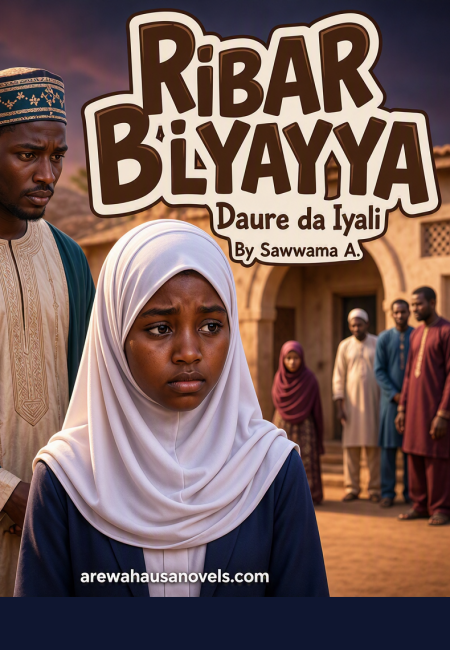
About this novel
Description
What happens when obedience becomes the price of keeping a family together? For fifteen-year-old Fatima, the answer arrives before she is ready for it. In a home where a father's word carries unquestionable authority, her older sister Khadeeja is being pushed into a marriage she fiercely rejects, while Fatima watches helplessly as love, family expectations, tribal identity, education, and parental control collide. Then, just when she believes she is only a witness to her sister's struggle, her own future is suddenly placed on the same path.
Summary
Ribar Biyayya by Sawwama A. opens inside a troubled household in Jos, where Khadeeja is repeatedly beaten by her father because she refuses to marry the man he has chosen for her. Khadeeja already loves Abdulhameed and refuses to surrender her future simply because her father believes marriage within the family is the proper choice. Her resistance comes at a devastating cost, and Fatima, her younger sister, is forced to witness the consequences from close range.
Fatima's compassion for Khadeeja becomes one of the emotional foundations of the story. She sees the physical and emotional suffering her sister is enduring, yet she also understands the pressure placed on their mother and the fear that surrounds their father. When Fatima's friend Charity suggests involving their grandmother and seeking outside intervention, a small possibility of change begins to emerge. The arrival of their grandmother eventually leads to Khadeeja receiving medical attention and, more importantly, creates an opportunity for the family to reconsider the marriage being forced upon her.
But the conflict does not disappear. When Khadeeja's rejection finally reaches the point where her father decides that her beloved Abdulhameed must come forward with his family, another marriage arrangement unexpectedly takes shape. Rather than Khadeeja becoming the intended bride, Fatima's father announces that Fatima will marry Sagir, the same young man Khadeeja had rejected. The decision leaves the fifteen-year-old girl frightened and confused, especially because she is still concerned about her education and cannot understand why marriage is being discussed at such a young age.
Sagir himself is not presented as someone eager to force Fatima into marriage. After learning about the proposed arrangement, he questions whether marrying a fifteen-year-old girl is appropriate and worries about interfering with her education. He had initially been interested in Khadeeja, but her rejection has already changed his circumstances. Now, his uncle proposes Fatima as an alternative, creating a complicated situation in which Sagir must decide how to respond while dealing with his family's expectations and his own future plans.
The story takes an even more complicated turn when Sagir's family becomes involved. His mother, Hajiya, strongly resists the idea of allowing the marriage arrangement to be abandoned, while Fatima's mother feels trapped between her daughter's future and the expectations of the wider family. Eventually, an agreement is reached that Khadeeja will marry Abdulhameed, while Fatima's marriage to Sagir is planned for after she completes JSS3. For Fatima, however, the promise of obedience offers little comfort. At only fifteen, she is left wondering whether doing what her parents demand will truly bring the happiness they promise, or whether she is simply being asked to surrender her childhood and ambitions.
Novel Description
Ribar Biyayya is a Hausa family drama and coming-of-age romance built around arranged marriage, parental authority, youthful innocence, family loyalty, and the difficult consequences of obedience. The story moves between households and communities in Jos and Bauchi, bringing together characters whose decisions are shaped not only by personal desires but also by family traditions, ethnic relationships, reputation, and expectations surrounding marriage.
The setting gives the story a strong cultural atmosphere. The household in Jos becomes the central stage for much of the conflict, while the connections to Bauchi introduce another layer of family politics and expectations. School life also plays an important role through Fatima's experiences as a student, reminding readers that her life is not defined solely by marriage. She is still a young girl with education, friendships, humor, curiosity, and dreams that exist independently of the decisions adults are making for her.
At the heart of the novel is a question that becomes increasingly difficult to answer: How far should obedience to parents extend when the decision affects an individual's entire future? Fatima's mother teaches her that obeying her parents can bring blessings and eventually allow her to experience the "profit of obedience." Yet Fatima's own fears suggest that obedience can also come with sacrifices that a young person may not fully understand.
Core Themes
Obedience and Parental Authority
The title itself points toward the central conflict. Fatima is taught that obedience to her parents is valuable, but the story examines what that obedience demands from her. Her father's authority shapes the lives of both sisters, leaving them with very little control over decisions concerning marriage.
Love Versus Family Expectations
Khadeeja's love for Abdulhameed stands directly against the marriage her father wants for her. Her refusal becomes a source of conflict, while Sagir's involvement introduces another complicated relationship between affection, family connection, and marriage expectations.
Education and Early Marriage
Fatima's age becomes particularly important because she is still in school. Her concern about completing her education places her personal ambitions against the marriage plans being made around her. The story therefore explores the tension between childhood, education, and expectations of adulthood.
Family Loyalty
Fatima repeatedly tries to protect Khadeeja despite being frightened of their father. Even when her attempt to help unintentionally leads to further punishment for her sister, she remains emotionally attached to her. Their relationship gives the story much of its tenderness.
Cultural and Family Identity
The novel also explores how family background, community expectations, and ethnic relationships influence marriage decisions. Characters repeatedly refer to Hausa, Fulani, and Birom identities, showing how cultural expectations become intertwined with family relationships.
Key Characters
Fatima is the fifteen-year-old central figure whose life changes dramatically when her father's marriage decision turns toward her. She is obedient, playful, academically minded, compassionate toward her sister, and young enough to be confused by the adult decisions surrounding her.
Khadeeja is Fatima's older sister and one of the strongest sources of conflict in the story. She refuses to marry a man she does not love because her heart belongs to Abdulhameed. Her determination places her in direct confrontation with their father.
Sagir is the young man originally connected to Khadeeja's proposed marriage and later chosen for Fatima. He is portrayed as educated, ambitious, humorous, and connected to his family. His own reaction to Fatima's age makes his position particularly complicated.
Abdulhameed is the man Khadeeja loves. His relationship with her becomes the reason she refuses her father's chosen arrangement, eventually forcing the matter toward a formal family decision.
Baba is Fatima and Khadeeja's father. His strictness and determination drive much of the novel's conflict. He believes strongly in his authority over his daughters and becomes determined to see his decisions carried out.
Mama is caught between her husband's authority, the wider family's expectations, and the emotional needs of her daughters. Her conversations with Fatima reveal how trapped she feels by the circumstances surrounding the family.
Hajiya represents another powerful force within the extended family. Strong-willed and outspoken, she has her own expectations concerning who should marry whom and how family relationships should be preserved.
Ngo becomes an important intervention figure when she discovers the severity of Khadeeja's condition. Her involvement gives the family an opportunity to confront what has been happening inside the household.
Charity, Fatima's friend, provides an outside perspective. Her willingness to suggest seeking help shows that Fatima is not completely alone in trying to understand or challenge what is happening around her.
Analytics and Insight
The most compelling element of Ribar Biyayya is the way the story gradually transfers the reader's attention from Khadeeja's struggle to Fatima's. At first, Fatima appears to be the younger sister watching someone else fight against an unwanted marriage. As the story develops, however, the same issue moves directly into her own life.
The title also gains greater significance as the plot develops. "Ribar Biyayya," meaning the benefit or reward of obedience, is presented almost as a promise from the adults around Fatima. Yet the story leaves readers to question what that reward might actually mean when obedience requires a young person to accept decisions she does not fully understand.
Another striking element is the contrast between the sisters. Khadeeja responds to pressure through open resistance, while Fatima is more inclined toward obedience and emotional compromise. Their different reactions create an interesting tension because neither girl experiences the family's expectations in exactly the same way.
Sagir's character adds another layer because he is not simply portrayed as an eager participant in the arrangement. His concern about Fatima's age and education introduces uncertainty into a marriage plan that the adults appear ready to settle. This makes his eventual role in Fatima's life one of the story's important unanswered questions.
A Thought-Provoking Quote
"Sometimes obedience is praised before anyone asks what it costs the person who obeys."
Why Readers Will Want to Continue
Ribar Biyayya does not build its suspense around a single secret. Its tension comes from watching ordinary family decisions gradually become life-changing consequences. Khadeeja has already fought for the right to choose the person she loves. Now Fatima stands at the edge of a future she did not ask for.
With family pressure mounting, marriages being negotiated, loyalties being tested, and Fatima's education hanging in the balance, the biggest question is no longer simply whether she will obey. It is what that obedience will eventually make of her life.
And that is where the real story begins.