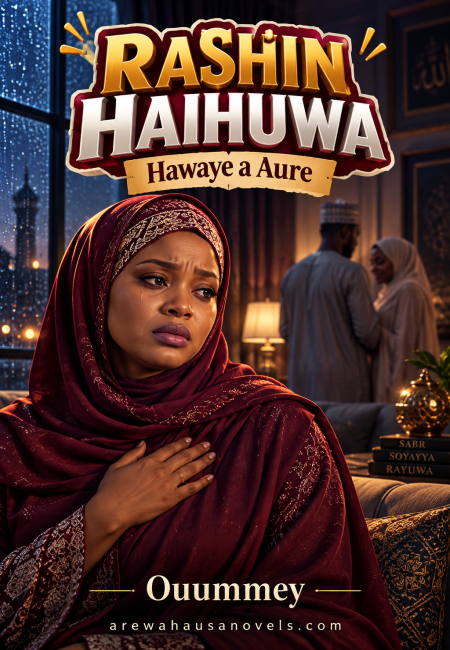
About this novel
RASHIN HAIHUWA
By Ouummey
The Intrigue
What happens when a woman gives her marriage everything she has, yet the one blessing everyone expects her to possess becomes the reason she is treated as though she is worth less than others? For Khadijah, childlessness is not merely a private sorrow. It is a wound that reopens with every cruel remark, every moment of rejection, and every reminder that her husband has children with another woman. Trapped between the love she still holds for her husband and the emotional pain of living in a home where her place seems increasingly uncertain, Khadijah must find the strength to survive a marriage that is slowly breaking her spirit. But how long can a woman endure being punished for something beyond her control before she begins to question whether the life she is fighting to preserve is worth the suffering it brings?
Summary
Rashin Haihuwa (Ƙaddarar Wasu Matan) by Ouummey is a deeply emotional Hausa novel that explores the painful realities of infertility, the complexities of polygamous marriage, and the devastating consequences of measuring a woman's worth by her ability to bear children. At the centre of the story is Khadijah, a beautiful, young, married woman whose outward appearance conceals a private struggle that has followed her for years. Despite her elegance, professional achievements, and efforts to maintain her marriage, she carries a sorrow that no amount of beauty or material comfort can erase. Her greatest desire is to experience motherhood, yet the absence of a child has become a source of emotional suffering and insecurity in her life. What makes her situation particularly heartbreaking is that the pain does not come from infertility alone, but from the people who turn her circumstances into a reason to diminish her.
Khadijah's marriage to Salees, a man she still loves despite their growing distance, reveals how affection can gradually become overshadowed by resentment, neglect, and unequal treatment. Once a relationship filled with love and happiness, their marriage has become increasingly difficult for Khadijah to navigate. Salees has children with his other wife, Mariya, including Ilham and the younger Amir, and his attachment to them creates an emotional divide within the household. Khadijah understands that children need their father's attention, but she also longs for the consideration and respect that should come with being his wife. Instead, ordinary domestic disagreements frequently become painful confrontations in which her childlessness is used against her. Even moments when she attempts to please her husband and preserve their intimacy cannot shield her from the harsh reality of her position.
Mariya's presence adds another layer of tension to Khadijah's already troubled life. Although Mariya sometimes presents herself as a reasonable and caring woman, her words and actions reveal a more complicated relationship between the two wives. Subtle provocations, hurtful comparisons, and disagreements over the children repeatedly place Khadijah in situations where she feels misunderstood and humiliated. The conflict becomes even more distressing when Ilham, influenced by the tensions surrounding her, begins to treat Khadijah with disrespect. Khadijah struggles to establish boundaries while dealing with the resentment and insecurity that have accumulated over time. When an argument involving Ilham becomes another opportunity for Mariya to accuse her, Salees responds without giving Khadijah the opportunity to explain her side. His readiness to believe the other woman's account deepens Khadijah's sense of isolation and raises a painful question about whether her voice still matters in her own marriage.
Beyond the walls of her home, Khadijah continues to shoulder responsibilities that reveal a different side of her character. She works in the revenue service, maintains her professional duties, and strives to remain composed despite the emotional turmoil that follows her into the workplace. Her career offers evidence of her competence and independence, yet even professional progress cannot completely free her from the burden of her private life. The possibility of a promotion brings her a moment of genuine hope, reminding readers that her identity extends far beyond her marital struggles. Her relationships with her parents and siblings also reveal the importance of family support. Her mother encourages her to practise patience, prayer, and kindness, while her father offers her a listening ear when the pain becomes too overwhelming to contain. These moments provide a glimpse of the emotional refuge Khadijah needs as she attempts to make sense of her circumstances.
As the story progresses, Khadijah's suffering becomes a struggle between endurance and emotional survival. She wants to preserve her marriage, but the repeated humiliation, accusations, and lack of understanding leave her increasingly exhausted. Her father's counsel directs her towards faith, prayer, and inner peace, offering a different perspective on how she might confront the difficulties before her. Yet spiritual strength does not erase the need for dignity, fairness, and compassion within a marriage. With family tensions mounting and her relationship with Salees growing more complicated, Khadijah faces an uncertain future. Will patience and faith help her find peace within her marriage, or will the constant emotional wounds force her to reconsider the life she has been trying so desperately to protect? The opening chapters establish a compelling emotional journey whose full outcome remains to be discovered.
Description: Genre and Setting
Rashin Haihuwa is an emotional domestic drama with strong themes of marital conflict, family relationships, psychological suffering, and faith. Rooted in the social realities of Hausa family life, the novel examines the expectations placed upon married women, particularly within polygamous households where the presence of children can influence affection, authority, and a wife's sense of belonging. Its narrative moves between the private spaces of the family home and Khadijah's professional environment, contrasting the responsibilities she fulfils publicly with the distress she experiences behind closed doors.
The household is the story's primary emotional setting. It is a place where love, jealousy, motherhood, rivalry, and competing expectations coexist, often turning everyday interactions into sources of conflict. The bedroom, dining area, and family sitting room become settings for confrontations that expose the imbalance in Khadijah's relationships. Outside the home, her workplace represents competence, ambition, and the possibility of achievement independent of her reproductive circumstances. These contrasting environments help establish the central tension of the novel: Khadijah can be capable and accomplished in one part of her life while feeling powerless and undervalued in another.
The story also draws upon the spiritual and cultural dimensions of its setting. Prayer, patience, trust in Allah, respect for parents, and the understanding of hardship as a test of faith shape the characters' responses to suffering. Rather than presenting infertility as evidence of personal failure, the novel challenges the assumptions that allow society to attach shame to women who have not conceived. Its emotional intensity comes from the collision between deeply held cultural expectations and the human need for compassion, dignity, and acceptance.
Core Themes
Infertility and the Meaning of Womanhood
The central theme of the novel is the emotional and social burden of infertility. Khadijah's experience illustrates how a deeply personal circumstance can become a public judgment when others use motherhood as the principal measure of a woman's worth. Her pain is intensified by the belief that she must continually prove herself worthy of love and respect despite circumstances she cannot control. The story challenges this damaging perception by affirming that a woman's value does not depend on whether she has given birth.
Polygamy, Jealousy, and Unequal Treatment
The relationship between Khadijah, Salees, and Mariya exposes the emotional complications that can emerge in a polygamous marriage. Competition, insecurity, divided loyalties, and differences in parental status affect the household's atmosphere. The novel explores how favouritism and the failure to establish fair boundaries can transform a marriage into an environment of persistent emotional distress. It also raises questions about the responsibilities of a husband who must balance his relationships while treating each wife with fairness and respect.
Emotional Abuse and Marital Neglect
Khadijah's suffering extends beyond disagreements or isolated insults. Repeatedly having her childlessness used against her, being dismissed when she attempts to explain herself, and watching her husband accept accusations without hearing her side gradually undermine her emotional security. The story demonstrates how words and everyday behaviour can inflict lasting harm, especially when they come from the people whose understanding matters most.
Motherhood, Step-Parenting, and Family Boundaries
Khadijah's relationship with Ilham and the younger children in the household highlights the complicated position of a wife who has no biological children of her own. She is expected to participate in family responsibilities while navigating the emotional boundaries established by the children's mother. The resulting conflicts raise important questions about respect, discipline, affection, and the challenges of creating a harmonious household when adults fail to manage their disagreements constructively.
Faith, Patience, and Emotional Resilience
Faith is a significant source of comfort throughout the narrative. Khadijah's parents encourage her to turn to Allah, remain patient, and avoid allowing resentment to determine her actions. These lessons offer her a way to seek peace amid circumstances she cannot fully control. At the same time, the novel's emotional conflicts invite readers to consider the relationship between patience and self-respect, reminding them that spiritual endurance and the need for humane treatment are not mutually exclusive.
Family Support and the Need to Be Heard
Khadijah's conversations with her mother and father reveal how important it is to have someone willing to listen without judgment. Her father's response to her tears offers a striking contrast to the dismissive treatment she experiences at home. Through these relationships, the story highlights the power of empathy and the difference a compassionate listener can make when someone feels emotionally overwhelmed.
Key Characters
Khadijah
Khadijah is the protagonist whose life gives the novel its emotional centre. Beautiful, professionally accomplished, and deeply invested in her marriage, she longs for the experience of motherhood while struggling with the humiliation associated with her childlessness. She continues to care for her husband and his children, yet repeated rejection tests the limits of her patience. Her character embodies the conflict between the desire to preserve a relationship and the need to protect one's emotional well-being. Her journey invites readers to look beyond appearances and recognise the pain that may remain hidden beneath a composed exterior.
Salees
Salees is Khadijah's husband, a man whose affection for his children is evident but whose treatment of Khadijah frequently leaves her feeling neglected and unfairly judged. He becomes angry over domestic disagreements and often appears willing to accept Mariya's version of events without carefully considering Khadijah's perspective. His character is central to the novel's examination of marital responsibility, fairness, and emotional accountability. The question is not simply whether he loves his family, but whether he can recognise the damage caused by his conduct towards the woman who continues to love him.
Mariya
Mariya is Salees's other wife and the mother of Ilham and Amir. Her position within the household gives her considerable influence over the family dynamic, particularly through her relationship with the children and her husband's response to their needs. Her interactions with Khadijah shift between apparent friendliness and behaviour that deepens the other woman's distress. Through Mariya, the novel explores rivalry, manipulation, insecurity, and the ways in which family tensions can become more destructive when compassion gives way to competition.
Ilham
Ilham is Salees and Mariya's daughter, approximately thirteen years old in the events presented. Her resemblance to her father and her familiarity with her position in the household contribute to her confidence, but her treatment of Khadijah reveals an increasingly strained relationship. Her disrespectful remarks and resistance create further conflict between the adults. Ilham's character also raises questions about the influence of parental attitudes on children and the importance of teaching respect within blended and polygamous families.
Amir
Amir is the younger child whose nighttime crying becomes the trigger for an early confrontation between Khadijah and Salees. His needs are ordinary for a young child, yet the situation exposes the resentment and emotional insecurity that have developed within the household. Amir himself is not responsible for the adults' conflict, but his presence highlights the complicated realities of sharing a home when one wife is a mother and the other longs for a child of her own.
Khadijah's Mother
Khadijah's mother is a source of affection, reassurance, and spiritual guidance. She encourages her daughter to remain patient, trust Allah, and maintain a peaceful relationship with her co-wife and the children. Her advice reflects the importance of faith and family support, even as Khadijah struggles to put those teachings into practice while facing repeated emotional wounds.
Khadijah's Father
Khadijah's father provides one of the story's most compassionate moments when he recognises the depth of her suffering through her tears. Rather than demanding explanations or immediately intervening in her marriage, he listens and reminds her of the importance of prayer, patience, and seeking comfort through faith. His response reveals a gentler model of emotional support and gives Khadijah a moment of relief in an otherwise distressing period of her life.
Salima
Salima is Khadijah's elder sister. Although the opening chapters offer limited detail about her role, Khadijah's thoughts reveal that she is mindful of her sister's feelings and hesitant to discuss her marital difficulties with her. Their relationship introduces another dimension of Khadijah's isolation, showing that even when family members care about one another, personal sensitivities can make it difficult to share painful experiences openly.
A'isha
A'isha is Khadijah's colleague at the revenue service. Her brief interactions with Khadijah provide a glimpse of the protagonist's working life outside the family home. Through this professional connection, the novel reminds readers that Khadijah has ambitions, responsibilities, and an identity that extend beyond the struggle dominating her marriage.
Analytics & Insight
The emotional strength of Rashin Haihuwa lies in its focus on a form of suffering that can be difficult for outsiders to recognise. Khadijah is not portrayed simply as a woman who wants a child. She is a woman whose longing for motherhood has become entangled with her sense of security, her marriage, and the way others perceive her. Every remark about her childlessness carries the weight of previous humiliations, making even ordinary family interactions emotionally charged.
The novel also builds its conflict through repetition and escalation. A disagreement over a crying child develops into a confrontation about belonging in the marital home. A dispute over school responsibilities becomes another opportunity for blame. A disagreement over discipline leads to accusations that Salees accepts without properly hearing Khadijah's explanation. These incidents create a pattern in which the protagonist is repeatedly placed on the defensive, allowing readers to understand how emotional exhaustion develops over time rather than appearing suddenly.
Another important dimension is the contrast between Khadijah's outward strengths and her inner vulnerability. Her beauty, employment, financial independence, and ability to manage household responsibilities might suggest that she has everything under control. Yet these qualities cannot protect her from the insecurity created by her husband's behaviour and society's expectations surrounding motherhood. The contrast makes her character relatable to readers who have experienced the gap between appearing strong and privately struggling.
The narrative also invites a critical examination of responsibility within a polygamous household. Salees's love for his children is understandable, but his affection does not excuse his failure to listen fairly to his wife. Similarly, Mariya's responsibilities as a mother do not justify humiliating another woman, and Khadijah's suffering does not automatically make every response she gives appropriate. The complexity of these relationships encourages readers to consider the importance of accountability, healthy boundaries, and mutual respect rather than reducing every conflict to a simple contest between good and bad characters.
Ultimately, the novel's central message is that infertility should never be treated as a measure of personal worth. The author's dedication to women experiencing childlessness reinforces this purpose, presenting the story as both an emotional narrative and a challenge to the stigma surrounding women who have not conceived. Its emphasis on faith and patience adds spiritual depth, while its domestic conflicts make the consequences of cruelty tangible. Readers are encouraged to reflect not only on Khadijah's endurance, but also on the responsibility families and communities have to treat vulnerable people with compassion.
What Makes This Novel Worth Reading?
Rashin Haihuwa offers readers a powerful combination of family drama, emotional tension, relatable domestic conflicts, and meaningful social commentary. Its subject matter reaches beyond the experience of one fictional marriage, addressing attitudes that can affect women in real communities. Readers who enjoy Hausa novels centred on marriage, co-wife relationships, family expectations, and the emotional consequences of deeply rooted social beliefs will find plenty to engage with.
The story's appeal also lies in the questions it leaves unanswered. Can love survive when one partner repeatedly feels abandoned? Can a household find peace when jealousy and resentment influence the treatment of children and spouses? How much patience can reasonably be expected from someone who is continually hurt, and what happens when the person she needs most becomes part of her suffering? These questions give the narrative an enduring emotional pull and encourage readers to look beyond the immediate arguments to the deeper wounds beneath them.
Above all, this is a story that asks readers to recognise the humanity of women whose experiences are often misunderstood. It challenges the assumption that motherhood is the only measure of a woman's fulfilment and reminds readers that compassion should never depend on a person's reproductive circumstances.
A Note on the Novel's Emotional Message
The novel's portrayal of Khadijah's struggles is especially significant because it distinguishes between a woman's circumstances and her worth as a human being. Her childlessness does not make her less deserving of love, dignity, companionship, or respect. Her pain reflects not only the difficulty of living with an unfulfilled desire but also the harm caused when others turn that desire into a weapon.
Through Khadijah's experiences, Ouummey draws attention to the need for greater understanding within marriages and families. A woman struggling with infertility needs compassion rather than ridicule, emotional support rather than constant comparison, and a fair hearing rather than automatic blame. The story encourages readers to reconsider how casually spoken words can leave lasting wounds, particularly when they target a person's deepest insecurity.
Memorable Quote
“A woman's worth is not measured by the children she bears, but by the humanity, dignity, and love she deserves, whether motherhood comes into her life or not.”
This is an original thematic quote inspired by the novel's message, not a direct quotation from the text.
Final Verdict
Rashin Haihuwa (Ƙaddarar Wasu Matan) is an emotionally charged story about infertility, marital disappointment, family rivalry, and the search for peace in the middle of personal suffering. Through Khadijah's experiences, the novel examines what happens when a woman's deepest vulnerability becomes the very thing others use to judge her. Her struggle with Salees, Mariya, and the shifting relationships within their household creates a compelling portrait of a marriage under pressure, while the support of her parents introduces moments of tenderness and hope.
For readers seeking a Hausa novel with emotional depth and a meaningful social message, this story offers more than a sequence of domestic disputes. It opens a conversation about the dignity of women, the responsibilities of marriage, the complexities of polygamous family life, and the importance of treating infertility with sensitivity. Khadijah's journey is far from simple, and the unresolved tensions in the opening chapters leave readers wondering whether love, patience, and faith will be enough to help her find the peace she desperately needs.
Discover Rashin Haihuwa by Ouummey and follow Khadijah's journey through heartbreak, family conflict, and the difficult search for dignity in a world that too often judges women by motherhood.